My friend Marichel posing with a group of 'Hoofddorpians' sheep.
One of the things I like the most about the Netherlands is the total synergy of urban spaces and nature. You can go walking down the street in Amsterdam and find swans, cranes and ducks in the canals. In Hoofddorp, which I wouldn't call a rural place, I just have to go 50 meters away from my house to find cows, sheep and goose. They are just there, in the middle of the city.
Lately, whenever I go to Madrid, I miss the water and the nature. I get the feeling that every green item is designed and artificially placed in a specific manner, solely as a decoration motif. Unfortunately, water is not that abundant there. It's much easier to have all these green spaces when your country doesn't face water scarcity. I bet they don't know what water restriction is here in Holland, despite the Rhine being recently at its lowest level since 1921. I remember having water restrictions when I was small and it was not fun. I guess that's the reason why I usually don't complain much about the weather; thanks to all that rain we can enjoy the beautiful scenery of this country.
Though a sunny day makes it even more beautiful :-)
Una de las cosas que más me gusta de los Países Bajos es la sinergia de los espacios urbanos y la naturaleza. Vas caminando por las calles de Ámsterdam y te encuentras cisnes, grullas y patos en los canales. En Hoofddorp, que no podría considerarse un espacio rural, solo tengo que ir a 50 metros de mi casa para ver vacas, ovejas y gansos. Están ahí, en el centro de la ciudad.
Últimamente, cuando voy a Madrid, echo de menos el agua y la naturaleza. Tengo la sensación de que cada elemento 'natural' ha sido diseñado y colocado artificialmente de una manera específica, únicamente como motivo de decoración. Desafortunadamente, el agua no es tan abundante allí. Es mucho más fácil tener todos estos espacios verdes cuando el agua no escasea. No creo que aquí sepan lo que son las restricciones de agua, incluso a pesar de que el Rin llegó recientemente a su nivel más bajo desde 1921. Recuerdo haberlas sufrido cuando era pequeña y no era nada divertido. Supongo que esa es la razón por la que normalmente no me quejo mucho del clima aquí; gracias a toda esta lluvia podemos disfrutar del hermoso paisaje de este país.
Aunque hay que admitir que un día soleado lo hace aún más bonito :-)

Credits: SomosUno
If you happen to have:
- 2 big boxes of M5000 Sun servers (ok, 'maybe' it could work with any other thing)
- 3 aerosol paint in pink
- Mattel logo and 'Barbie' typeface
- a good printer
- 1 spray glue
- a lot of pink wrapping paper
- nylon flat rope
- blonde wig/plastic toupee
- pink/pastel colour clothes
Then you could build your own Barbie/Ken costume like we did for a carnival party here in Holland. Carnival is very popular in the South of the Netherlands but this party happened in Amsterdam since it was organized by a friend from the Canary Islands where Spain's largest carnival is celebrated.
Come on Barbie, let's go party!
Si por casualidad tienes:
- 2 cajas grandes de servidores Sun M5000 (bueno, 'puede' que funcione con otra cosa)
- 3 sprays de pintura rosa
- logo de Mattel y tipo de letra 'Barbie'
- una buena impresora
- spray adhesivo
- bastante papel de regalo en color rosa
- cinta plana de nylon
- peluca rubia/tupé de plástico
- prendas en color rosa/pastel
Entonces podrías construir tu propio disfraz de Barbie/Ken como hicimos nosotros para una fiesta de carnaval aquí en Holanda. El carnaval es muy popular en el sur de los Países Bajos pero esta fiesta tuvo lugar en Ámsterdam ya que fue organizada por una amiga de Canarias donde se celebra la fiesta de carnaval más grande de España.
Come on Barbie, let's go party!

Photo by arinas74
We are never sure whether we should count from the 29th: the day we arrived to the Netherlands, with only the things that could fit in our car after a long trip through a frozen Spain and France, or the 30th: the day we woke up in our new land, facing an uncertain future with lots of enthusiasm. Anyhow, at that time I couldn't have answered the question "how long are you going to be here?" and as time goes by it seems that I could have answered "long time, my friend".
But again now... how long will I be here? I simply don't know. I like living life as it comes and I don't usually think a lot about the future. Things just happen. This anniversary just happened and I am very happy with it.
So, for now... long life Holland!
Nunca estamos seguros de si deberíamos contar desde el 29: el día que llegamos a Holanda únicamente con las cosas que cabían en nuestro coche tras un largo viaje a través de unas España y Francia congeladas, o el 30: el día que nos despertamos en nuestra nueva tierra, con un futuro incierto por delante pero cargados de entusiasmo. De cualquier manera, en aquel momento no podría haber contestado la pregunta "¿cuánto tiempo vas a estar aquí?" pero según pasa el tiempo parece que podría haber contestado "bastante tiempo, amigo".
Pero de nuevo ahora... ¿cuánto tiempo estaré aquí? Simplemente no lo sé. Me gusta vivir la vida según viene y normalmente no pienso mucho en el futuro. Las cosas simplemente pasan. Este aniversario ha pasado y estoy muy contenta de que así haya sido.
Así que, por ahora... ¡larga vida a Holanda!

For years, I have been really looking forward to being a blood donor but unfortunately for various reasons I never could, until a few months ago. Then I started my research on how to become a blood donor here in the Netherlands and I discovered that the approach is quite different compared to the process in Spain. If in the last post I praised the Dutch efficiency for certain procedures, in this one I have to confess that I am quite disappointed.
Blood donation in the NetherlandsThe Dutch system has a big amount of preliminary steps. At the donation center you fill out a registration card with your contact information. Then, once you are in the system and this can take a while, they will call you to schedule an appointment for a medical examination. First-time donors do not donate blood after this first examination, you have to wait for notice of your eligibility by postal mail. It can again take weeks until you receive this letter in which you will be informed of the date from which you are allowed to donate within a two-week window. Then the donation itself has the regular on-the-spot preliminary testing.
Blood donation in SpainYou walk into a local blood drive, hospital or donor center, you complete the tests in a matter of minutes, donate, and go. Your blood is of course thoroughly tested afterwards, and if any problem it will be disposed of.
After learning about the differences I’ve made my decision: I will donate blood in my next trip to Spain.
Durante años siempre he querido donar sangre aunque por diferentes motivos no he podido hasta hace unos pocos meses. Entonces empecé a buscar información sobre cómo donar sangre en Holanda y descubrí que todo el proceso es bastante diferente comparado con España. Si en el último post alabé la eficacia holandesa para ciertos procedimientos, en este tengo que confesar mi absoluta decepción.
Donar sangre en Holanda
El sistema holandés tiene una gran cantidad de pasos preliminares. Primero has de registrarte en un centro de donantes. Una vez que tus datos son procesados, y esto puede llevar un tiempo, te llamarán para concertar una cita para el examen médico. Esta cita también puede tardar un tiempo y además, una vez que hagas el examen médico aún no donarás sangre si es tu primera vez. Te informarán de tu aptitud como donante por carta, la cual también tardará en llegar. Siendo apto, una vez que te llege la carta te informarán de la fecha desde la cual puedes donar sangre por un periodo de dos semanas. Una vez llegado el esperado día, la donación irá precedida del típico test in-situ.
Donar sangre en España
En un centro de donación, hospital o unidad móvil se completa el test preliminar y se procede a la donación. La sangre se analiza a posteriori y en caso de no ser apta será desechada.
Después de conocer las diferencias he tomado mi decisión: donaré sangre en mi próximo viaje a España.

Credits: Daniel G. Ríos.
Due to my profession I often talk about usability and user experience referred to online tools. Keep reading to see how important user experience is in 'real life' too, applied in this case to the process of buying a second hand car.
Once you have found the car of your dreams, and from my experience this can take a while, some paperwork is needed in order to buy it. Let's compare this process in both Spain and the Netherlands:
In Spain:
Be sure you have a full day free and do all the steps together with the seller.
Go to 'Hacienda' (tax office), find the right queue for vehicle transfers and be certain that's the one you have to be, because when your turn comes you don't want to be told you should have been queueing at the other, even longer, one. Once at the desk, hand out the forms 620 ('Impuesto de Transmisiones Patrimoniales') and 430 ('Declaración de Transmisión de Compraventa') both previously downloaded or bought, to the clerk. After submitting these papers the officer will tell you the amount to pay (currently 4% of the value of the vehicle according to the official valuation). If you are lucky enough you will be able to pay this amount after queueing again in the same office but it can be that you have to go to a bank and then come back. Once you have paid, present the payment proof (usually to another clerk, after another queue) and if everything is in order, your documents will be validated with a stamp.
With all these documents and the car documents, go to the "Jefatura de tráfico" office. Warning: there are only 3 in all Madrid province!. Wait the never-ending queue to pay again some taxes and then wait again at the next window where you and the seller will submit all the possible documents you can think of: the receipt of the payment you just made, yours and the seller's ID documents, car papers, photocopies, contract, etc. Finally you get the vehicle registration with your name on it.
In the Netherlands:
Take the car documents, your passport and, if not Dutch, a proof of registration in your municipality not older than 3 months. Go with the seller to the closest post office. There will be no queue. Fill in a form, pay 9,25€ and get the car documents registered in your name.
Moral: It's a big difference when processes are designed to make user’s experience easier, in this example the citizen, who should not interact physically with all possible administrations involved in one single process. Instead, the citizen triggers the process in just one place and afterwards, the entities involved communicate between them.
Debido a mi profesión, hablo a menudo de usabilidad y de experiencia de usuario en relación a herramientas online. Sigue leyendo si quieres conocer cuan importante es la experiencia de usuario también en la ‘vida real’, aplicada en este caso al proceso de comprar un coche de segunda mano.
Una vez que has encontrado el coche de tus sueños, y por experiencia propia esto puede llevar un tiempo, es necesario algún que otro papeleo para ponerlo a nuestro nombre. Vamos a comparar este proceso en España y en Holanda:
En España:
Reserva un día entero libre y haz todos los pasos junto con el vendedor.
Ve a Hacienda, encuentra la fila para los trámites de transmisión de vehículos y asegúrate de que es la fila correcta porque después de esperar no querrás que te digan que no era ésa sino la otra de al lado, más larga incluso que en la que estás. Una vez en el mostrador, entrega los formularios 620 (Impuesto de Transmisiones Patrimoniales) y 430 (Declaración de Transmisión de Compraventa) ambos previamente comprados o descargados. Después de entregar los documentos, el funcionario te dirá la cantidad que debes pagar (actualmente un 4% del valor del vehículo según la tasación oficial). Si tienes suerte podrás pagar allí mismo, pero podría ser que tengas que salir, ir a un banco y volver. Una vez que has pagado, presentas el justificante de pago (normalmente tras esperar en otra fila diferente) y si todo está en orden te validarán tus documentos con un sello.
Ahora deberás ir a la Jefatura de Tráfico. Advertencia: ¡sólo hay 3 en la provincia de Madrid!. Espera otra cola interminable para pagar de nuevo algunas tasas y espera de nuevo en el mostrador de al lado donde tú y el vendedor entregaréis todos los papeles imaginables: recibo del pago que acabas de hacer, DNI tuyo y del vendedor, los papeles del coche, fotocopias, contrato, etc. Finalmente, el registro del vehículo figurará a tu nombre.
En Holanda:
Coge los papeles del coche, pasaporte y, si no eres holandés, una prueba de registro en tu ayuntamiento de hace 3 meses como mucho. Ve con el vendedor a la oficina de correos más cercana. No habrá cola. Rellena un formulario, paga 9,25€ y te entregarán los documentos del coche con tu nombre.
Moraleja: existe una gran diferencia cuando los procesos se diseñan para hacer la experiencia de usuario más sencilla, en este caso la del ciudadano, que no debería interactuar físicamente con todas las administraciones implicadas en un simple proceso. Al contrario, el ciudadano inicia el proceso en un único lugar y después, las entidades implicadas se comunican entre ellas.

Photo by Grupo Alter.
Following with the series of posts about those things that a Spanish person misses here in Holland, there is a product that is always mentioned by all Spaniards at one given time: "Couldina".
This medicine is mainly composed of aspirin and a couple of more ingredients which are really good for congestion. For me, it is the best thing to fight a cold. It does not exist here in the Netherlands and I know a bunch of Spaniards who buy it whenever they go to Spain and bring it here for those future under-the-weather days.
Are you also living away from your home country? Then, please tell me about those things you are "forced to import" from your country because you simply cannot live without them!
Siguiendo con la serie de posts sobre aquéllas cosas que los españoles echamos de menos en Holanda, hay un producto que siempre es mencionado por los españoles más tarde o más temprano: la couldina.
Esta medicina está principalmente compuesta por aspirina y por un par de ingredientes más que son buenísimos para la congestión. Para mí es lo mejor para combatir un resfriado. Como no existe aquí en Holanda, conozco a un buen grupo de españoles que aprovechan sus viajes a España para comprar Couldina y así tenerla para esos futuros días en que estamos pachuchos.
¿Tú también vives fuera de tu país de orígen? Díme entonces qué es lo que te ves "forzado a importar" de tu país porque simplemente ¡no puedes vivir sin ello!

'Mixto con huevo" vs. 'Uitsmijter"
The simple yet delicious 'sandwich mixto' is how we Spaniards call a grilled ham&cheese sandwich. When you are hungry enough to need more than a 'tapa' but don't want to have a proper long lunch, the best thing is a 'mixto', and if you like it even more complete, then ask for a sandwich 'mixto con huevo', with an egg. The funny thing is that the top bread has a hole to see the egg yolk and this is serious stuff. That hole needs to be there! Otherwise it's not a proper 'mixto con huevo' :-)
Now here is the Dutch version: 'uitsmijter', pronounced outs-my-ter, more or less. And I dare to say this is the Dutch deconstruction of the Spanish 'mixto con huevo'. The slices of bread are not grilled and the ham goes on top of them and then the egg. The cheese is optional and goes on top of everything so it is not covered with more bread.
And here is the surprise... do you want to know about the origin of this dish? It comes from the German Strammer Max:
"The term Strammer Max (literally "stiff Max" or "tight Max") originated in the 1920s in Saxon slang, where it initially referred to an erection, the male name "Max" being often used as a slang word for penis (similar to the English "Dick" or "Willy"). The term was adopted into Berlin street slang and applied to a dish that was supposed to be especially strengthening to the sexual prowess of the person eating it." Source: Wikipedia
Surprise! So, what do you prefer: 'mixto con huevo', 'uitsmijter' or 'strammer Max'? :-D
El simple y a la vez delicioso sandwich mixto es como en España llamamos a un sandwich tostado de jamón y queso. Cuando tienes hambre y una tapa se queda corta pero sentarse a comer es demasiado, lo mejor es tomarse un sandwich mixto y si se quiere más completo, entonces un sandwich mixto con huevo. Lo gracioso es que el pan de encima tiene que tener un agujero para ver la yema y... ¡esto es muy serio! ¡Ese agujero tiene que estar ahí! Si no no será un auténtico sandwich mixto con huevo :-)
Pero he aquí la versión holandesa: 'uitsmijter', pronunciado algo así como auts-mai-ter. Y me atrevo a decir que los holandeses han hecho la desconstrucción del sandwich mixto con huevo. El pan no está tostado y sirve de base al jamón y al huevo. El queso es opcional y va encima del todo, por lo que no se cierra con más pan.
Y aquí viene la sorpresa... ¿queréis saber más sobre el origen de este plato? Es alemán y allí se llama Strammer Max:
"El Strammer Max (literalmente, "Max dura" o "Max apretada") se originó en la década de 1920 en el argot de Sajonia, donde inicialmente hacía referencia a una erección; el nombre de "Max" se utiliza a menudo como argot para pene (similar al Inglés "Dick" o "Willy"). El término fue adoptado en el argot Berlinés y se aplica a este plato que se supone aumenta la potencia sexual de quien lo toma." Fuente: Wikipedia (en inglés)
Ahí es nada... Y vosotros, ¿qué preferís: mixto con huevo, 'uitsmijter' o 'strammer Max'? :-D
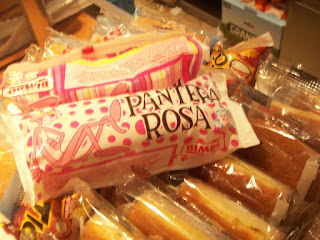
Pantera Rosa. Photo by Pi.
I always wanted to start a series of posts about those things that a Spanish person might miss in Holland. Those things that one cannot find in any shop in The Netherlands. Probably, your first thought will be ham or olive oil, but now these things are everywhere... though I agree they don't have the same quality as in Spain, unless you go to a specialized Spanish import & deli shop.
Anyway, I am talking about those things you simply cannot find ANYWHERE. So here it goes my first item: "La Pantera Rosa" (The Pink Panther), a cream filled cake coated in pink chocolate. A classic!! Where can you buy this in The Netherlands... or even out of Spain? NOWHERE!
Siempre he querido empezar una serie de posts dedicados a esas cosas que un Español en Holanda podría echar de menos. Esas cosas que no se pueden encontrar en ninguna tienda de Holanda. Probablemente, en lo primero que pienses sea jamón o aceite de oliva, pero esas cosas se encuentran ya en muchos sitios, aunque no con la misma calidad que en España a no ser que vayas a una tienda de delicatessen española.
En cualquier caso, a lo que me refiero aquí es a ese tipo de cosas que no puedes encontrar en NINGÚN sitio. Así que aquí va mi primer post: La Pantera Rosa, el típico pastelito relleno de crema y cubierto de chocolate rosa. ¡Todo un clásico! Y ¿dónde encuentras esto en Holanda... o incluso fuera de España? ¡En NINGUNA parte!

Departure flights cancelled at Schiphol airport. Photo by Dan.
It is amazing how your life changes when your are an expat. Suddenly you travel a lot and as most of your friends are expats... they also travel a lot. Then your agenda becomes a complex world of knowing where everybody is, when they are coming back, whether you will be in The Netherlands or Spain for this Birthday, this gathering, this farewell party.
This kind of nomadic lifestyle leads to the fact that around 95% of the people I met during the last few years have been affected, to a different extent, by the unpronounceable Icelandic volcano:
- I had to travel to Berlin (business trip, international Symposium) but of course, it was not possible and my company arranged a bus for everybody. 10 hours to get to Berlin instead of 1 hour 15 minutes. However, at the end the whole event was cancelled. People from Canada, USA, Japan and Russia couldn't get there either... so there was no point. Some of my colleagues went to Berlin by train hoping to come back by plane... but they are either trapped there or condemned to another 7-hour trip back to Amsterdam.
- Daniel had to go to Madrid... but he gave up after rescheduling for the fifth time!! and being on hold on the phone with KLM for ages.
- Our friend Baran made a trip Amsterdam-Paris-Amsterdam in one day to rescue one friend.
- Jackie is trapped in the UK with her parents stranded in Spain.
- Our friend Eduardo was also due to fly from the UK to Spain... but again, it was impossible.
- Other people we know had to take a bus from Amsterdam to Toulouse, others are a bit luckier and can go by car to the close Belgium.
And what about you? Have you been affected by the ash cloud??? Come on, have your say... prove me that someone is still reading this blog :-)
Es asombroso cómo tu vida cambia cuando eres un expat. De repente pasas a viajar mucho y la mayoría de tus amigos son expats ... por lo que también viajan mucho. Tu agenda es un complejo caos en el que tienes que saber donde está todo el mundo, cuándo vuelven, y si tú vas a estar en Holanda o en España para tal o cual cumpleaños, reunión o fiesta de despedida.
Este estilo de vida cuasi nómada lleva al hecho de que cerca del 95% de las personas que he conocido durante los últimos años se han visto afectadas, en distinta medida, por el volcán islandés de nombre impronunciable:- En teoría yo tenía que viajar a Berlín (viaje de negocios, Simposio Internacional) pero por supuesto no fue posible y mi empresa organizó un autobús para todo el mundo. 10 horas para llegar a Berlín, en vez de 1 hora y 15 minutos. Sin embargo, al final todo el evento fue cancelado. La gente de Canadá, EE.UU., Japón y Rusia no podía llegar allí ... asi que no tenía sentido. Algunos de mis colegas fueron a Berlín en tren con la esperanza de volver en avión y ahora o se quedan allí atrapados... o tendrán que volver a sufrir 7 horas en tren a Amsterdam.
- Dani tenía que ir a Madrid ... pero se dio por vencido después de cambiar su vuelo por quinta vez! y de estar en espera al teléfono con KLM durante horas.
- Nuestro amigo Baran tuvo que hacer Amsterdam-París-Amsterdam en un día para rescatar a una amiga.
- Jackie se encuentra atrapada en el Reino Unido con sus padres varados en España.
- Nuestro amigo Eduardo también tenía que volar desde el Reino Unido a España ... pero, una vez más, fue imposible.
- Otras personas que conocemos tuvieron que coger un autobús desde Amsterdam a Toulouse, otros tienen un poco más suerte y pueden ir en coche a la cercana Bélgica.
¿Y tú? ¿Te ha afectado la nube volcánica??? Vamos, decid algo ... demostradme que alguien sigue leyendo este blog :-)

Today it's been 3 years since we arrived to The Netherlands and it seems like it is time to make an assessment of all this period.
If I look back I don't regret the decision of leaving Spain at all. I had a comfortable life, a good job with a good salary (in terms of salaries in Spain) and a favorable future ahead... but having such a conventional life and that certain future has always scared the hell out of me so I wanted a change, something different, even difficult, which required effort and made me feel proud of my achievements. In short, a challenge.
After settling down, which was not easy (living in a bed&breakfast while looking for a house... then living without furniture for some time) we started a very busy life. I had to attend to the University, study and work, at the same time, for a Spanish company, which is not the ideal for starting a "new" life abroad but I needed the money and that was the only option at that time. Fortunately, last year has been a bit more different and specially the last months, since which I work for an international organization and I am starting to build a new network of friends from everywhere in the world.
I find that life in The Netherlands is quite relaxed compared to life in Spain, not only due to the different timetables and habits but also because I have less social engagements given that my family is a bit far from here. Though I like that feeling, sometimes I feel like an alien, alone, like I don't belong here but I don't belong there either... it's a weird combination that, apparently, is not that uncommon among people living abroad. Dave Hampton pointed out this article written in the Economist where all these feelings are quite well reflected.
Anyway, I am looking to the future with a positive attitude. Suddenly this adventure does not seem as temporary as it might be and I have a life that I like here. Maybe the time has come to finally learn some Dutch :-)
Hoy hace 3 años que llegamos a Holanda y es, por tanto, un buen momento para hacer balance de este periodo.
Mirando atrás no lamento en absoluto la decisión de salir de España. Tenía una vida confortable, un buen trabajo con un buen sueldo (de acuerdo a los sueldos españoles) y un futuro favorable por delante... pero llevar una vida tan convencional y tener un futuro tan estudiado siempre me ha asustado bastante así que necesitaba un cambio, algo diferente, incluso difícil, que requiriese esfuerzo y me hiciera sentir orgullosa de lo logrado. En definitiva, un reto.
Después de asentarnos, lo que no fué fácil (viviendo al principio en un bed&breakfast mientras buscábamos una casa... y luego viviendo sin muebles por algún tiempo) empezamos una vida bastante ocupada. Yo tenía que ir a la Universidad, estudiar y al mismo tiempo trabajar para una empresa española, lo cual no es la opción más acertada para empezar una "nueva" vida en el extranjero pero había que ganar dinero y esa era la única opción en ese momento. Afortunadamente, el año pasado ha sido bastante mejor, sobre todo los últimos meses en los que he empezado a trabajar para una organización internacional y estoy conociendo a mucha gente de todas partes.
La vida en Holanda me resulta bastante más relajada que la vida en España y no sólo por lo que me afecta respecto a horarios y costumbres, sino también porque aquí tengo muchos menos compromisos sociales ya que mi familia está bastante lejos. Aunque esta sensación me gusta bastante, también siento a veces que soy una extraña, que estoy sola, que no pertenezco ni a aquí ni a allí... es una combinación rara que por lo visto no es tan peculiar entre la gente que vive en el extranjero. Dave Hampton destaca este artículo escrito en The Economist y en el explican todos estos sentimientos bastante bien.
De todas formas, miro al futuro con optimismo. De repente esta aventura no parece tan pasajera como podría ser y tengo una vida que me gusta aquí. A lo mejor hasta ha llegado el momento de aprender holandés :-)

Spain is the country with the highest unemployment rate within the Euro area (19.3%) while The Netherlands has an unemployment rate of only 3.6% (source: Eurostat). Given these facts one can think that it would be easier to find a job in The Netherlands and I agree with that. The only problem is that you need to be fluent in either Dutch or English.
I have read some articles explaining that Spain would get over this crisis if their citizens emigrated. There are too many people and few jobs for them. My generation is one of the most prepared and educated, nevertheless they are offered poor jobs. Besides the language issue, most of the Spanish citizens have mortgages to pay and a family to maintain, so not all of them can just leave everything behind and move to another country. Young people, with no attachments yet, could have a better chance to escape from this economic holocaust if they moved abroad. The question is: are they willing to accept this challenge?
España es el país con mayor tasa de desempleo en la zona euro (19,3%) mientras que Holanda tiene una tasa de desempleo de sólo el 3,6% (fuente: Eurostat). Ante estos hechos se puede pensar que es más fácil encontrar un trabajo en los Países Bajos y estoy de acuerdo con eso. El único problema es que se tiene que dominar el inglés o el holandés.
He leído algunos artículos que explican que España superaría esta crisis si sus ciudadanos emigraran. Hay demasiada gente y pocos puestos de trabajo para ellos. Mi generación es una de los más preparadas y formadas a la que, sin embargo, se le ofrece puestos de trabajo de baja categoría. Además de la cuestión del idioma, la mayoría de los ciudadanos españoles tienen hipotecas que pagar y una familia que mantener, lo que no todos ellos pueden dejar todo atrás y trasladarse a otro país. Los jóvenes, sin ataduras aún, sí podrían tener una mejor oportunidad de escapar de este holocausto económico si se fueran al extranjero. La pregunta es: ¿están dispuestos a aceptar este desafío?

Maximum darkness we can achieve here. Photo by scataudo
Spaniards living in Holland miss something very important when they wake up in the morning: window blinds. The Netherlands might not be a sunny country, but the light here is pretty incredible. There is a myth that the light in Holland is different from anywhere else. This is probably caused by the permanent humidity, even if it is not raining. Painters and writers have been fascinated by the Dutch light for decades.
Houses here do not come with exterior blinds already installed as in Spain. Though we have been trying to adapt and get used to the light in the morning, it is hard... specially on weekends, when you always want to sleep a little bit more :-). If you live in a rented house like us, you cannot install exterior blinds so we tried to block the light with venetian blinds but, as you can see in the picture, they are not very effective. Then, the only solution to prevent the light from waking you up in the morning is to have blackout curtains and they have to be very well installed to block the light completely, so we are still working on that.
Anyhow, this makes me think about what is natural and what is not. It would be more natural to wake up with morning light instead of forcing our body to follow artificial schedules. Unfortunately we are already spoiled... but our children can still be saved!!! :-D
Los españoles que viven en Holanda echan de menos algo muy importante cuando se levantan por la mañana: las persianas. Holanda puede que no sea un país muy soleado, pero la luz aquí es increíble. Existe un viejo mito de que la luz en Holanda es diferente a la de cualquier otro lugar. Probablemente se debe a la humedad permanente, incluso cuando no llueve. La luz en Holanda ha sido objeto de fascinación durante décadas para muchos pintores y escritores.
En Holanda, las casas no tienen las persianas exteriores ya instaladas como en España. Aunque hemos intentado adaptarnos y acostumbrarnos a la luz, es duro... especialmente los fines de semana cuando siempre se quiere dormir un poquito más :-). Si vives en una casa de alquiler, como nosotros, no puedes instalar persianas exteriores así que intentamos bloquear la luz con persianas venecianas pero, como podéis ver en la foto, no es muy efectivo. La única solución para evitar que la luz te despierte por la mañana es poner cortinas tipo "foscurit" y tienen que estar muy bien instaladas para que bloqueen al 100%, así que aún seguimos trabajando en ello.
De todas maneras, esto me hace pensar en lo que es natural y lo que no lo es. Sería más natural despertarse con la luz del día y no forzarnos a seguir horarios artificiales. Por desgracia nosotros ya estamos echados a perder... pero nuestros hijos aún pueden salvarse!!! :-D
At last I can update this blog. A lot of things have happened since my last post but you will be duly informed about all these things in the following posts.
The first thing that should be commented here is that our friends José, Maria José and Marta came to visit us on Easter. It was the second visit for Marta, so we can say that the "second round" of visits has been officially opened.
We enjoyed a FAN-TAS-TIC weather (last year was the coldest Easter ever!) and we fell in love with Utrecht as we visited this city in a splendid sunny day and all the terraces along the canals were full of people and joy. We also visited Keukenhof and Alkmaar and it is incredible how beautiful this country can be when it is sunny!! We also seized the opportunity to go to the northern provinces of Friesland and Groningen, as we hadn't been there yet.
Terraces in Alkmaar (left) and Utrecht (right).We are getting impacient now, wondering who the next visitors might be...
Por fin puedo actualizar el blog. Han pasado muchas cosas desde mi último post pero seréis debidamente informados de todas estas cosas en los próximos días.
Lo primero que debe ser comentado aquí es que nuestros amigos José, Maria José y Marta nos visitaron por Semana Santa. Era la segunda visita para Marta, así que ya podemos decir que la segunda ronda de visitas ha quedado oficialmente inaugurada.
Nos hizo un tiempo FAN-TÁS-TI-CO (el año pasado fue la Semana Santa más fría de la historia) y nos enamoramos de Utrecht ya que la visitamos en un espléndido día soleado y todas las terrazas de los canales estaban llenas de gente y vida. También visitamos Keukenhof y Alkmaar y es increíble lo bonito que puede ser este país cuando hace sol. Aprovechamos también la ocasión para ir a las provincias del Norte, Friesland y Groningen, ya que nunca antes habíamos estado allí.
Ahora estamos impacientes, preguntándonos quiénes serán los próximos en venir a visitarnos...

The Château de Chambord, one of the most famous castles in the French Loire Valley / Castillo de Chambord, uno de los más famosos del Valle del Loira. Photo by Somosuno.
We like adventure and we like driving, so we drove to Madrid last Christmas passing by wonderful places like Disneyland Paris, Orleans, Chambord Castle (photo), Tours and Bordeaux.
What we didn't know is that Madrid was going to be collapsed due to heavy snow on the date we were supposed to leave. This "heavy snow" is probably something Canadians would laugh at because it was only 7 centimeters of snow, but that's "heavy snow" for us. Anyway this shouldn't be enough to collapse everything: highways, airport, bypasses... and the Government has been widely criticized for this reason.

Palacio de Cristal en el Retiro, Madrid / Cristal Palace in Retiro Park, Madrid.
9th January, 2009. Photo by Marta Marrodán.
Despite this chaos, and having said that we like adventure, we left Madrid anyway skipping the blocked roads by making a "slight" detour through Valladolid.

Outbond trip: 1,799 km, about 16 hours 57 minutes.
Return trip: 1,889 km, about 17 hours 46 minutes.
Como nos gusta la aventura y nos gusta conducir, fuimos a Madrid en coche en las fiestas Navideñas y aprovechamos para pararnos en bonitos lugares como Disneyland París, Orleans, el Castillo de Chambord (foto), Tours y Burdeos.
Lo que no sabíamos es que Madrid iba a estar colapsado el día que teníamos que volvernos debido a una fuerte nevada. Esta "fuerte nevada" es algo que haría mucha gracia a los Canadienses ya que fueron sólo 7 centímetros de nieve, aunque eso es mucha nieve para nosotros. De todas formas eso no es suficiente para colapsar toda una ciudad: autopistas, aeropuerto, circunvalaciones... y el Gobierno ha sido duramente critizado por este motivo.
A pesar del caos, y ya que hemos dicho que nos gusta la aventura, salimos igualmente y evitamos las carreteras bloqueadas haciendo un "pequeño" desvío por Valladolid.
Viaje de ida: 1,799 km., unas 16 horas y 57 minutos.
Viaje de vuelta: 1889 km., unas 17 horas y 46 minutos.

Where would you prefer to go shopping, Madrid or Amsterdam?
Well, it may seem difficult to answer at the beginning, so to make things easier here you go the opening hours of a well-known shop in Amsterdam:
Mon: 12:00 - 18:30
Tue-Wed: 10:00 - 18:30
Thu: 10:00 - 21:00
Fri-Sat: 10:00 - 18:30
Sun: 12:00 - 18:00
The same shop in Madrid:
Mon-Sun: 10:00 - 22:00
This is not a particular case, this is almost a rule. It's not only that you would need a PDA or a piece of paper in The Netherlands in order to remember the opening hours for every single day of the week but also you have much less time to go shopping in Amsterdam than in Madrid, or Spain in general. Besides, the closing time in Madrid means that you can go to the cash register at that time, even later, but in The Netherlands, the closing time reflects when the shop has to be completely closed.
Sometimes is even worse and the shop closes 5 minutes ahead, so you might think that if the shop closes at 18.00, for instance, at that time the shop assistants will be already at home. So you better get your shopping done 15-20 minutes before the closing hour, otherwise you'll be kindly requested to leave the shop and of course, don't even dare to think about entering the shop in the last half an hour.
Having said that, the next question would be: in which of these cities would you prefer to work in a shop? No need to answer this one :-)
¿Dónde preferirías ir de compras, Madrid o Amsterdam?
Bien, puede parecer difícil al principio, así que para ponértelo más fácil aquí tienes el horario de apertura de una tienda muy conocida de Amsterdam:
Lun: 12:00 - 18:30
Mar-Mié: 10:00 - 18:30
Jue: 10:00 - 21:00
Vie-Sáb: 10:00 - 18:30
Dom: 12:00 - 18:00
La misma tienda en Madrid:
Lun-Dom: 10:00 - 22:00
No es un caso particular, es lo habitual. No es sólo que necesites en Holanda una PDA o un trozo de papel para recordar el horario de cada día de la semana, sino que también tienes mucho menos tiempo para comprar en Amsterdam que en Madrid, o España en general. Además, la hora de cierre en Madrid significa que ese es el momento de ir a la caja a pagar, o incluso más tarde, pero en Holanda, la hora de cierre es el momento en el cual la tienda tiene que estar completamente cerrada.
A veces es incluso peor, y la tienda cierra 5 minutos antes de la hora, por lo que podremos pensar acertadamente que si la tienda cierra a las 18.00, por ejemplo, a esa hora los dependientes estarán ya en su casa. Por este motivo es mejor ir terminando las compras 15 o 20 minutos antes del cierre o seremos amablemente invitados a abandonar el local en cualquier momento y por supuesto, ni se te ocurra pensar en entrar en la tienda en la última media hora de apertura.
Habiendo dicho esto, la siguiente pregunta sería: en cuál de estas ciudades te gustaría trabajar? No hace falta contestar a ésta :-)
Spanish flag raised in our house. / Bandera española izada en nuestra casa. Photo by tnarik.
Dutch flags on the National Day. / Banderas holandesas en el Día Nacional. Photo by SomosUno.Today is the National Day of Spain, also known as Hispanic Day, which commemorates Columbus' arrival in the Americas in 1492. There is a big military parade in Madrid, presided by the Spanish King, the President and some other authorities. To celebrate it we have raised the Spanish flag in our house, as here houses come with a flag holder already included in the facade so everybody can rise the Dutch flag on special dates like Queen's Day or Liberation Day.
12th of October is also celebrated in the Autonomous Community of Aragon, as it is their patroness' day: Our Lady of the Pillar ("Nuestra Señora del Pilar", with one "l" only in Spanish as many people write my name incorrectly). That means it is also my name's day! And the best man on earth surprised me taking a marvellous breakfast to bed, gift included.
Hoy es la Fiesta Nacional de España o, también llamado Día de la Hispanidad, que conmemora la llegada de Colón a América en 1492. En Madrid se celebra con un gran desfile militar al que acuden el Rey, el Presidente del gobierno y otras autoridades. Para celebrarlo hemos izado la bandera española en nuestra casa ya que aquí las casas vienen con una pieza incluída en la fachada que es para colocar la bandera en los días especiales como el día de la Reina o el día de la liberación.
El 12 de Octubre es también celebrado en la Comunidad de Aragón ya que es el día de su patrona: Nuestra Señora del Pilar. ¡Lo que significa que hoy es mi santo! Y el mejor hombre sobre la faz de la tierra me ha sorprendido trayéndome un maravilloso desayuno a la cama, regalito incluído.

Photo by Tnarik
Punctuality of Dutch public transportation is absolutely brilliant. Contrary to the Spanish system, more based on “estimation”, here they must use complicated mathematical equations.
Over the last months I’ve been using the train for commuting to work and the first days I used to miss the train. Why is that? Because if you check the timetable and see that the train comes at 09:05, then the real meaning is that the train will leave the station just at that minute. If you arrive at 09:04 you will have few chances of getting on the train, specially if you arrive in the second half of that minute. I will explain this example in detail: at 09:04:45 (yes, I have to use seconds here to explain this) the ticket inspector leans out of one door and introduces a key to close other doors. After he makes certain everything is ok, he presses the button to close his door around 09:04:50. Then, during the next 10 seconds that door is completely closed and all doorsteps are folded up. Finally, the train starts moving at 09:04:59 (feeling happy because everything was punctual and well done).
It is also incredible that if the train arrives only 5 minutes later they announce that over the PA system and apologize for that (at least that is what I think they are saying... in Dutch).
There is an essential tool for all those who use public transportation in The Netherlands: 9292ov.nl. In this website you simply introduce your departure point and destination and then you get the best options for your journey and accurate timetables for all public transportation. And not only trains are that punctual in The Netherlands but also buses. For example in Hoofddorp some electronic panels have been installed at the bus stops that presumedly will show the minutes left for the next bus... or maybe even the seconds left!!!
La puntualidad del transporte público holandés es absolutamente alucinante. Aunque en España tenemos un sistema más basado en la “estimación”, aquí deben usar complicadas ecuaciones matemáticas.
Desde hace un tiempo vengo utilizando el tren de forma continua y los primeros días perdía casi todos los trenes. ¿Por qué? Pues porque si dicen que el tren pasa a las 09:05 es que el tren está, a esa hora, dejando la estación. Si llegas a las 09:04 hay pocas probabilidades de que cojas el tren, sobre todo si llegas en la segunda mitad del minuto. Me explico: a las 09:04:45 (sí tengo que usar segundos para explicar esto) el revisor se asoma fuera del tren e introduce una llave para cerrar todas las puertas, excepto la suya. Luego de cerciorarse que todo está bien, cierra la suya como a las 09:04:50 y en esos 10 segundos restantes se cierra esa puerta y se recogen los escalones de las puertas. A las 09:04:59 el tren empieza a moverse (con la sensación del trabajo bien hecho y feliz por salir a su hora).
Es también increíble que si el tren se retrasa 5 minutos lo anuncian a bombo y platillo pidiendo disculpas por el retraso (al menos eso creo que dicen... en holandés).
Hay una herramienta fundamental para todos aquéllos que necesiten utilizar el transporte público en Holanda: la web 9292ov.nl. En ella simplemente dices donde estás y donde quieres ir y te dice la mejor combinación de transporte y el minuto exacto que pasa cada uno. Porque no sólo el tren es así de puntual, los autobuses también. Incluso ahora en Hoofddorp nos han puesto unos paneles en las paradas de los autobuses que presumiblemente servirán para informarnos de cuántos minutos quedan para que venga el autobús... o puede que incluso para ver cuántos segundos!!!
A short post dedicated to Spanair plane victim's relatives. Wishing them enough strength to get through (if that can ever be possible) this tragedy. Wishing the survivors, who are still recovering from physical injuries and will have a long psychological way to go, all the best.
We have been traveling quite a lot lately and usually you simply don't think about this possibility. I took a train the day before 11M attacks and I took a plane the day after this crash. So, though it might sound cheesy, I just simply want to thank God for giving me another day to enjoy life with all of you.
Un pequeño post dedicado a las familias de las víctimas del avión de Spanair. Deseándoles fuerza suficiente para superar (si eso puede ser alguna vez posible) esta tragedia. Deseando todo lo mejor a los supervivientes que siguen recuperándose en el hospital o, con más suerte, en casa.
Nosotros hemos viajado mucho últimamente y normalmente no piensas en esta posibilidad. Yo cogí el tren el día antes de los atentados del 11M y he cogido un avión el día después de este accidente. Así que, aunque suene cursi, quiero dar las gracias a Dios por darme otro día más para disfrutar con todos vosotros.

Photo: Pichí's new brother, Bacardi.
It has been strange these last weeks around here. A lot of new things happened. I will try to stick to the chronological path.
- I started "working" in a company like one month ago. The quotation marks are because I'm actually doing my thesis project there, thus I am not an employee but an intern. It's a good project, even more related to what I wanted than I expected. It's also a good company and an international one, so english is the official language at work. Alas, at lunch I am almost the only non-dutch speaker and then, as lunch is not "working hours", they speak in Dutch. As I don't understand any Dutch I seize the opportunity to think about stupid things like "what if music ends due to the end of notes permutation?"
- We have the craziest weather this summer. Dutch weather can be described as having four seasons in one day. It can be rainy and foggy in the morning, then sunny in the afternoon and windy in the evening. For example, I was caught by a heavy storm on Thursday and when I got to the office my hair was dripping wet as getting out of the shower. Later on it was completely sunny, as if nothing had happened... except my hair was still a mess :-(.
- Our friend Edu left the Netherlands one week ago. We don't know yet if it's going to be permanent but he decided to spend with us his last days here. Honestly, I don't know if it was due more to logistic matters than sentimental but we toasted with mojitos and played "WoW". Edu is completely addicted to WoW and we are trying to make him go to rehab but he says nooo, noooo, noooo (easy joke).
- Our friends Óscar and Yolanda passed by Amsterdam during a trip along France, Belgium and, naturally, The Netherlands. It was quite a surprise because we didn't know they were here and we managed to arrange a nice evening for all of us (Edu and my brother included) in Haarlem. Thanks for saving some time for us friends.
- We have adopted another cat!!! (see photo). This is really recently news 'cause it just happened a few hours ago and Pichí (our cat) will have to get used to the fact that she just had a little Dutch brother. She is snorting right now... humm, I guess that's not a good sign but we have to give her time. "Bacardi" (beautiful name, huh?) is a one and a half years old tabby cat and he seems very well-behaved, so far.
And that's all, folks. No holidays in Honolulu or Bahamas for the time being :-), not even in Spain. Just work, gym (did I say we go to a gym?) and cats.
Las últimas semanas han sido peculiares. Han pasado un montón de cosas nuevas. Intentaré ceñirme al curso cronológico de los eventos.
- Estoy "trabajando" en una empresa desde hace más o menos un mes. Lo pongo con comillas porque en realidad estoy haciendo mi proyecto de tésis, por lo que no soy una empleada sino más bien una estudiante en prácticas. Tengo un proyecto muy bueno, que está incluso más relacionado con lo que quería de lo que yo esperaba. La empresa es muy buena e international por lo que el inglés es el idioma oficial de trabajo. Desgraciadamente, a la hora de la comida soy casi la única que no habla holandés y, como la comida no es trabajo, suelen hablar en holandés. Como no entiendo nada de holandés aprovecho para pensar cosas estúpidas como "¿se acabaría la música al terminarse la permutación de notas musicales?"
- Tenemos un tiempo loco este verano. El tiempo por aquí podría describirse como tener las cuatro estaciones en un sólo día. Puede llover y estar nublado por la mañana, luego soleado al mediodía y con viento por la tarde. Por ejemplo, el jueves me pilló una buena tormenta y cuando llegué a la oficina mi pelo estaba completamente empapado como si acabara de salir de la ducha. Luego salió el sol como si nada... aunque mi pelo se quedó hecho un desastre :-(.
- Nuestro amigo Edu se ha vuelto a España hace una semana. Aún no sabemos si es definitivo pero pasó sus últimos días aquí con nosotros. A decir verdad, no sabemos si esto se debió más a temas logísticos que sentimentales pero al menos brindamos con mojitos y jugamos al "WoW". Edu es adicto al "WoW" y nosotros intentamos que vaya a "rehab" pero él que dice que nooooo, nooooo, nooooo (chiste fácil).
- Nuestros amigos Óscar y Yolanda pasaron por Ámsterdam durante su viaje por Francia, Bélgica y, por supuesto, Holanda. Fue una gran sorpresa porque no teníamos ni idea de que estaban por aquí y nos las apañamos para tener una agradable velada para todos (incluídos Edu y mi hermano) en Haarlem.
- ¡Hemos adoptado otro gato! Esto es muy reciente porque ha sucedido hace unas horas y Pichí (nuestra gata) ha de hacerse a la idea de que ha tenido un hermanito holandés. Ahora mismo le está bufando... mmm, creo que esto no es buena señal pero habrá que darle tiempo. "Bacardi" (bonito nombre, ¿eh?) es un gato tabby de año y medio que parece muy bueno, por ahora.
Y eso es todo amigos. No hay vacaciones en Honolulú o Bahamas por el momento :-), ni siquiera en España. Sólo trabajo, gimnasio (¿mencioné que vamos a un gimnasio?) y gatos.

I think the photo above says it all but for those who need an explanation, the strippenkaart is on the top and the metrobus is on the bottom. I cannot explain my feelings the first time I held this "strippenkaart", which in its longer version is as an A4, nor my astonishment when I discovered I had to fold it, according to the zones I was going to pass by, before validate it in the automatic machine. Luckily the "metrobus" is much more easier, smaller and modern (God bless magnetic stripes).
 Anyhow, this wouldn't be completely fair for the Dutchies. In 2009 the strippenkaart will dissapear and the OV-Chipkaart, which is already in use in some cities in The Netherlands, will replace it.
Now the question is... what are we (spaniards) going to do to this respect? The competition has already started! We need a contactless smartcard NOW!
La foto de arriba lo dice todo, ¿no?. Encima está el strippenkaart y debajo el metrobús. No os puedo explicar lo que sentí la primera vez que tuve en mis manos el strippenkaart, que en su versión más larga mide casi como un A4, ni mi estupefacción cuando ví que lo tenía que doblar según las zonas que fuera a recorrer, antes de meterlo en la máquina canceladora. Afortunadamente el metrobús es más sencillo, pequeño y moderno (Dios bendiga las bandas magnéticas).
Pero bueno, esto no sería del todo justo para los holandeses, ya que en 2009 el strippenkaart será completamente reemplazado por la OV-Chipkaart (foto de la derecha), que ya está en uso en algunas ciudades del país.
Ahora nos toca a nosotros (españoles). ¿Qué vamos a hacer al respecto? ¡Tenemos que alcanzarles! ¿Para cuándo una tarjeta que se active por proximidad?